Waypoint No. 5: Trump Accounts Are Live
Waypoint No. 5 · July 2026 · A Shetland Financial Publication
Trump Accounts Are Here
After about a year of hearing about it, Trump Accounts are now finally off the ground. They were a part of the 2025 tax law and are a brand new type of savings vehicle. The idea is to give kids a long runway of tax-deferred growth. Think of it less as a college fund and more as a decades-long head start on retirement-style saving. For children born between 2025 and 2028, there’s an added sweetener: the federal government seeds the account with a one-time $1,000 contribution. Accounts became available to open starting July 4, 2026, so if you haven’t already opened one for you kids / grandkids now is the time.
Before we go further, one quick note. This is about money, not politics. Your personal feelings about Donald Trump should factor into this decision about as much as your feelings about William Roth, the late senator whose name happens to be on the Roth IRA. What matters is whether the math works for your family.
How they work
Any child under 18 with a valid Social Security number is eligible. Families can contribute up to $5,000 per year, made with after-tax dollars, and that limit is indexed for inflation after 2027. The $1,000 government seed sits on top and doesn’t count against your annual room. The money is invested and grows tax-deferred while it sits, and it stays locked until the child turns 18. At that point the account generally converts to a traditional IRA and follows the usual retirement-account rules. This isn’t money you’ll tap for summer camp or a first car. It’s designed to compound quietly for twenty, thirty, or forty years.
As a quick example: if you had a baby this year, and put in $1,000 per year (plus the free $1k from the government) until they turned 18, using a 10% average growth rate the account would be worth around $62k when they turned 18. And since you’re going to teach them financial literacy and discipline, they’re not going to touch it right away. It will grow to $195k at age 30, $1.3M at age 50, and at age 65 they’ll have ~$5.5 million just thanks to you getting this set up for them.
Getting one set up: the logistics
The mechanics are more straightforward than you might expect, and they happen in a few steps. First, you make the election with the IRS by filing Form 4547 online. You’ll sign in through the IRS’s verified ID.me system, and the filing itself takes only a few minutes. Once the account exists, you head to Trump Accounts to actually open and fund it, choose your investments, and set up any recurring contributions. From there, you track everything on an ongoing basis through the site or its mobile app, just as you would a brokerage or 529 account, checking balances, adjusting contributions, and watching the growth over time. As the program rolls out through 2026, we’ll keep clients updated on any refinements Treasury makes to the process.
How they compare to 529 plans and UTMA accounts
All that said, Trump Accounts aren’t the only game in town. This is where thoughtful planning matters, because these accounts don’t really compete. They complement one another.
A 529 plan is still the gold standard when the goal is education. Qualified withdrawals for college, and increasingly for K–12 tuition, apprenticeships, and even a limited amount of student-loan repayment, come out completely tax-free, and many states offer a tax deduction or credit on the way in. Because a 529 is parent-owned, it’s also treated more favorably in financial-aid calculations. The trade-off is purpose: money pulled out for non-education spending gets taxed and hit with a 10% penalty on the earnings.
A UTMA/UGMA custodial account sits at the opposite end of the spectrum, offering maximum flexibility. There’s no contribution cap, and the funds can be used for virtually anything that benefits the child, from a car to a first apartment. The catch is control and taxes: the money is an irrevocable gift, the child takes full ownership at the age of majority (18 to 21, depending on the state), some of the earnings are exposed to the “kiddie tax,” and as a student-owned asset it weighs more heavily against financial aid.
A Trump account fills the gap neither of those was built for: long-term, retirement-oriented growth, plus that free $1,000 seed that’s genuinely hard to pass up if your child qualifies. Its contribution limit is more modest and the money is locked up longer, but that’s precisely the point. It’s the account you open when you want to hand a child a running start on their financial life rather than fund a specific near-term goal. For many families, the smartest approach isn’t choosing one. It’s layering a 529 for school, a UTMA for flexibility, and a Trump account for the long horizon.
The real prize: a Roth head start
Here’s the piece we find most exciting, and it works from two directions.
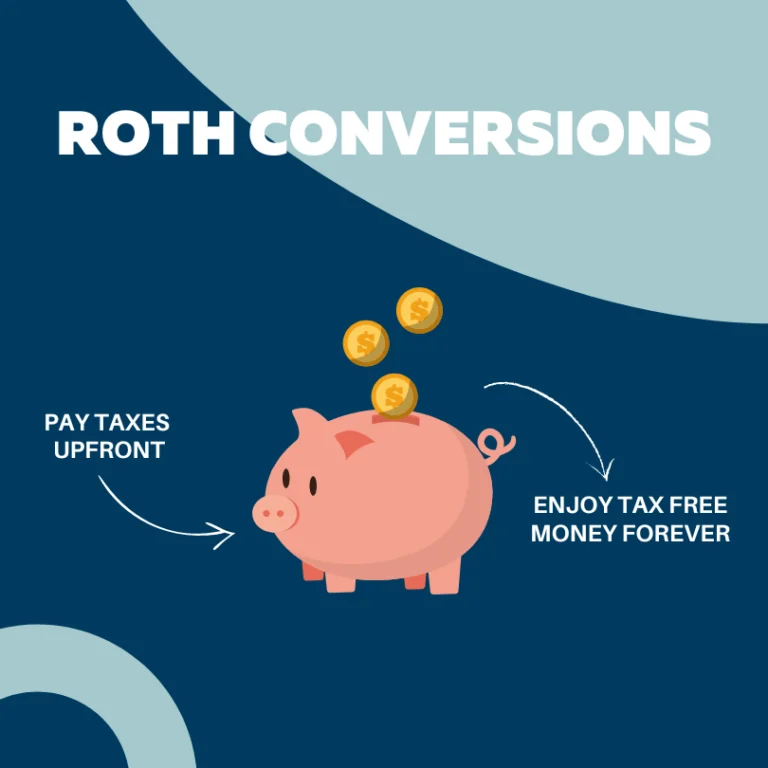
First, the Trump account itself. When it converts at 18, your child is often in one of the lowest tax brackets they’ll ever occupy, which opens the door to converting those dollars into a Roth IRA at very little tax cost. From there, the growth can compound tax-free for the rest of their life.
Second, and less well known, your 529 can feed a Roth too. Under current rules, leftover 529 funds can be rolled into a Roth IRA for the same beneficiary, which rescues money you might otherwise have paid a penalty to withdraw. Unused education savings get a second life as tax-free retirement money. But the cons matter just as much. There’s a $35,000 lifetime cap, the 529 must have been open at least 15 years, each year’s rollover can’t exceed the annual Roth contribution limit, and the beneficiary needs earned income to match. In practice that means the money moves over slowly, so this is a cleanup strategy for modest leftovers, not a way to shift large balances at once.
Either way, the theme is the same. A young adult who starts with even a modest Roth balance, decades before their peers open a first retirement account, has a nearly unbeatable head start. The rules around these conversions are still being finalized, which is exactly the kind of detail worth planning around in advance.
A note for business owners
If you own a business, there’s an angle worth your attention. Employers are permitted to contribute up to $2,500 per year into an employee’s child’s Trump account, and that contribution is excluded from the employee’s taxable income. That makes it a genuinely differentiated benefit, a tangible and tax-smart perk that helps your team invest in their children’s futures and can set your business apart when you’re competing to attract and keep good people. We’d be glad to help you think through how to structure it.
Let’s map it out
Which combination makes sense depends on your family’s tax picture, your cash flow, and what you’re actually saving toward. For business owners, it also depends on how a benefit like this fits your broader compensation strategy. If you’d like to talk through what’s right for your situation, or whether opening a Trump account next summer makes sense for your kids or grandkids, just reach out. We’re always happy to help you map it out.
As always, thank you for reading.
Kevin Dodgson CPA, CFA, CFP®
Founder & CEO, Shetland Financial